The short answer: In a growth team, the best mentor is someone still shipping. A player-coach — a senior operator who carries real delivery work and owns the development of two or three teammates — is the only mentoring model that survives contact with a weekly shipping cadence. Pure management layers slow small teams down. Pure individual contributors let knowledge rot in one person's head. The player-coach model splits the difference deliberately: roughly 70% of their week goes to hands-on execution, 30% to structured coaching, and the coaching is measured with the same rigor as the experiments.
We at Growaton run this model inside every pod, because a growth team that can't level up its own people hits a ceiling around month nine. Here's how it works, what it costs, and how to build it without turning your best builder into a calendar-managing husk.

Why growth teams break without a mentoring culture
Growth work is unusually dependent on tacit knowledge. The written artifact of an experiment — hypothesis, variant, result — captures maybe 20% of what actually happened. The other 80% lives in judgment calls:
- Why we killed the test at day 6 instead of waiting for significance
- Why we didn't trust the attribution data from that channel
- Why we shipped the ugly version first
- Why we pushed back on the founder's pet idea and what we said instead
None of that transfers through documentation alone. It transfers through proximity — someone watching a senior operator make the call, then making it themselves with a safety net.
This is why growth teams tend to fail in one of two predictable ways. In the hero pattern, one exceptional operator produces most of the results and becomes an unbackupable bottleneck; when they leave, velocity drops by half. In the churn pattern, the team hires juniors to scale cheaply, gives them no development structure, and watches them produce mediocre work for eight months before quitting.
Research consistently backs the cost of the second pattern. LinkedIn's Workplace Learning Report has repeatedly found that opportunities to learn and grow rank among the top drivers of great work culture, and that employees who see internal mobility and development stay meaningfully longer. Gallup's research on manager engagement similarly puts the manager relationship at the center of retention outcomes. For a seed-to-Series C startup where each operator represents 15–30% of total growth capacity, replacing one person is not an HR line item. It's a quarter of lost compounding.
What a player-coach actually is (and isn't)
The term comes from sports — a roster player who also holds coaching responsibility. In a growth pod, the definition needs to be sharper than the metaphor.
A player-coach is: a senior operator who owns a meaningful slice of delivery work, plus the explicit, measured development of 2–3 teammates.
A player-coach is not:
| Not this | Why it fails |
|---|---|
| A manager who "used to be technical" | Loses credibility within 2 quarters; can't review work at depth |
| A senior IC who "mentors when they have time" | Coaching gets deprioritized every single sprint |
| A team lead with 6+ direct reports | Span of control forces admin over development |
| An assigned "buddy" for onboarding | Ends at week 4; no ongoing accountability for growth |
The distinguishing feature is shared skin in the game. A player-coach reviews a junior's landing page test and is on the hook for the pod's conversion number. That alignment removes the classic mentoring failure mode where advice is free because the advisor bears no consequence for it being wrong.
The 70/30 split, and why the numbers matter
We allocate roughly 70% of a player-coach's week to hands-on building — writing code, running experiments, building models, shipping campaigns — and 30% to development activity. That 30% is not vague. It breaks down to something like:
- 4 hours/week: structured 1:1s and work review (two people, two hours each including prep)
- 2 hours/week: paired execution — actually building something together
- 2 hours/week: teaching artifacts (writing up a decision, recording a walkthrough, updating the playbook)
- ~4 hours/week: unblocking, async review, ad-hoc questions
Go below about 25% and coaching becomes reactive firefighting. Go above 40% and the coach stops being a player — they lose the current-context credibility that made them worth learning from in the first place. That's the trap most agencies fall into: the senior person sells and reviews but hasn't touched the tooling in 18 months, and the junior on the account knows it.
The five mechanics of a mentoring culture that ships
Culture is the residue of repeated behavior, not a value on a wall. These are the five mechanics that produce a mentoring culture inside a growth team. They pair naturally with the rituals in the ownership operating system — accountability and development are two sides of the same rhythm.
1. Work review, not status review
Most 1:1s are status meetings with extra steps. Replace them with artifact review: the mentee brings a real piece of work — an experiment brief, a query, a PR, an ad set, a pricing model — and the coach reviews it live, thinking out loud.
The thinking-out-loud part is the whole point. "Here's what I'd check first, and here's why" transfers judgment. "Looks good, ship it" transfers nothing.
A practical format that takes 45 minutes:
- 10 min: Mentee walks through the artifact and their reasoning
- 20 min: Coach interrogates the reasoning, not the output ("What would make this wrong?")
- 10 min: Coach demonstrates one alternative approach live
- 5 min: One committed change before next session
2. Deliberate difficulty ladders
Growth skills don't develop by osmosis. They develop when someone is handed the next-hardest thing they can plausibly survive. We map this explicitly per discipline. For a growth engineer, the ladder might run:
| Level | Representative task | Coach involvement |
|---|---|---|
| 1 | Ship a copy/layout variant on an existing test framework | Full review before launch |
| 2 | Instrument a new event and validate it end-to-end | Review the tracking plan, spot-check data |
| 3 | Design and run a full A/B test with a stated hypothesis | Review hypothesis + readout, not implementation |
| 4 | Own a funnel step's metric for a quarter | Weekly async check-in |
| 5 | Diagnose a novel problem and propose the roadmap | Sparring partner only |
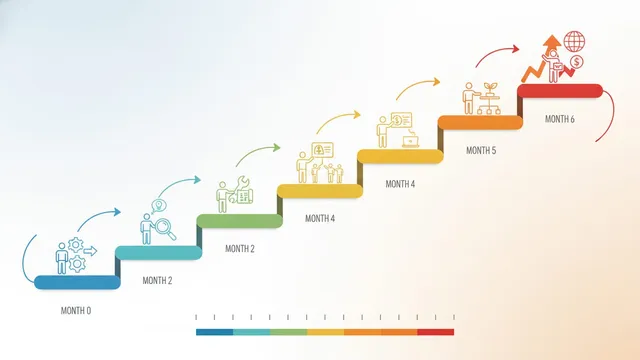
The coach's job is to know exactly which rung each person is on and to promote them slightly before they feel ready. Our internal experience — documented in more detail in how we take operators from junior to senior builder in six months — is that most people can move two rungs in a quarter when the ladder is explicit and stall indefinitely when it isn't.
3. Public post-mortems on losing experiments
The fastest mentoring mechanism in a growth team is the losing-experiment readout, done publicly and without blame. Roughly 70–80% of well-designed growth experiments fail to produce a win — that's the base rate practitioners like Ronny Kohavi report from large-scale experimentation programs, and it's the normal cost of testing real hypotheses.
That failure rate is a curriculum, if you treat it as one. Our rule: every experiment gets a written readout regardless of outcome, and losing experiments get more discussion time than winners. The junior who ran it presents. The coach asks what they'd do differently. Everyone else watches someone be wrong safely — which is the only way a team learns to take real swings.
4. Reverse mentoring on tooling and AI
The knowledge flow is not one-directional, and pretending otherwise wastes your junior operators. In practice, newer operators are often ahead on tooling — particularly AI-assisted workflows. Junior builders who grew up prompting tend to be faster at scaffolding, drafting, and automating; senior builders are faster at judgment, architecture, and knowing what not to build.
We formalize this: junior operators own a rotating "tooling teardown" slot where they demo something new to the pod, including the senior people. It costs 20 minutes a week and it does two things — it accelerates real capability across the team, and it tells a junior person their expertise is legitimate. Both matter.
5. Coaching that shows up in the performance conversation
If development isn't measured, it isn't real. Player-coaches at Growaton are evaluated on two axes: their own delivery output and the observable progression of the people they coach. That second axis needs concrete evidence:
- Did the mentee move up the difficulty ladder? (Named rung, named date.)
- Are they now shipping work that previously required review?
- Can they run a readout unsupervised?
- Retention and internal promotion within the coached group
The moment coaching becomes a "nice to have" in the performance conversation, it becomes the first thing dropped in a busy sprint. Which is every sprint.
What this costs, honestly
Player-coaching is not free, and any article claiming otherwise is selling something.
The real costs:
- ~30% of a senior operator's capacity. On a five-person pod with one player-coach, that's roughly 6% of total delivery capacity redirected to development. Budget for it or you'll cannibalize it.
- Slower short-term output on coached work. A junior doing level-3 work under review is slower than the coach doing it directly. For 4–8 weeks.
- A genuine skill gap. Great builders are not automatically great coaches. Giving feedback that lands, calibrating difficulty, and resisting the urge to just take the keyboard are learned skills.
The payback:
The math works when a coached operator reaches independent output. If a junior operator produces 40% of a senior's throughput at month one and 85% by month six, and you paid ~30% of one senior's time to get there, you've bought durable capacity at a fraction of the cost of a senior hire — plus you now have redundancy on knowledge that previously lived in one head.
The failure case is equally clear: coach for two quarters with no ladder movement, and you're subsidizing a plateau. Which is why the measurement in mechanic #5 isn't bureaucracy. It's the thing that stops mentoring from becoming a sunk cost.
How to install this in an existing team
If you're a team lead reading this with a five-person growth team and no mentoring structure, here's the 30-day version.
Week 1 — Map the ladder. For each discipline on your team (engineering, analytics, paid, lifecycle, content), write the five-rung difficulty ladder. Two hours of work. Be specific about tasks, not competencies — "own the trial-to-paid metric for a quarter" beats "demonstrates ownership."
Week 2 — Place everyone and pick coaches. Put every person on a named rung. Identify your player-coaches: people at rung 4–5 with the credibility and temperament for it. Cap them at three mentees. If you don't have anyone at rung 4–5, that's your real problem — solve it by hiring or borrowing before you solve mentoring.
Week 3 — Install two rituals. The weekly artifact-review 1:1 and the public experiment readout. Just those two. Put them on the calendar as immovable.
Week 4 — Rebalance load and commit publicly. Reduce your player-coaches' delivery commitments by 30%. Actually reduce them — don't just tell them to "find time." Then state in your team's operating doc that coaching progression is part of performance review, and name the next review date.
Reassess at 90 days. Ladder movement or a clear reason for the lack of it.
The three ways this goes wrong
- The coach never gives up the keyboard. Watch for the pattern where the "mentee" is functionally a hands assistant. Fix: the coach is not allowed to touch the artifact during review — only to demonstrate on a copy.
- You appoint a coach who wants to be a manager. They'll optimize for headcount and process. A player-coach's identity has to stay rooted in building.
- Delivery pressure quietly eats the 30%. This happens in month two of every implementation. The only defense is that the coaching time is on the calendar and in the performance review.
Why we build pods this way
The reason this matters commercially — and we'll be direct about it — is that an embedded growth pod is only as good as its bench depth. If we staff a client with one brilliant operator and three people learning on the client's dime with no structure, the client is buying a lottery ticket. If we staff a pod where senior builders are accountable for developing the people beside them, capability compounds across engagements instead of walking out the door.
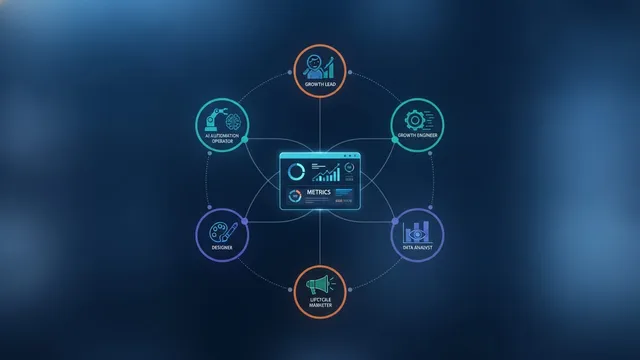
That's the difference between a staffing arrangement and a team. It's also why the roles inside a high-ownership growth pod are defined with explicit development responsibility, not just delivery scope — and why our 4-Phase Growth Framework treats internal capability as a measured output alongside CAC, conversion rate, and payback period.
If you're building a growth function and trying to figure out whether your team's ceiling is strategy, tooling, or talent development, that's exactly the kind of thing a free growth diagnostic conversation is for. No pitch deck required — bring your org chart and your last six experiments.